Safety
Safety Measures
Use the links below to review the potential roadway safety measures that may be included in the project.
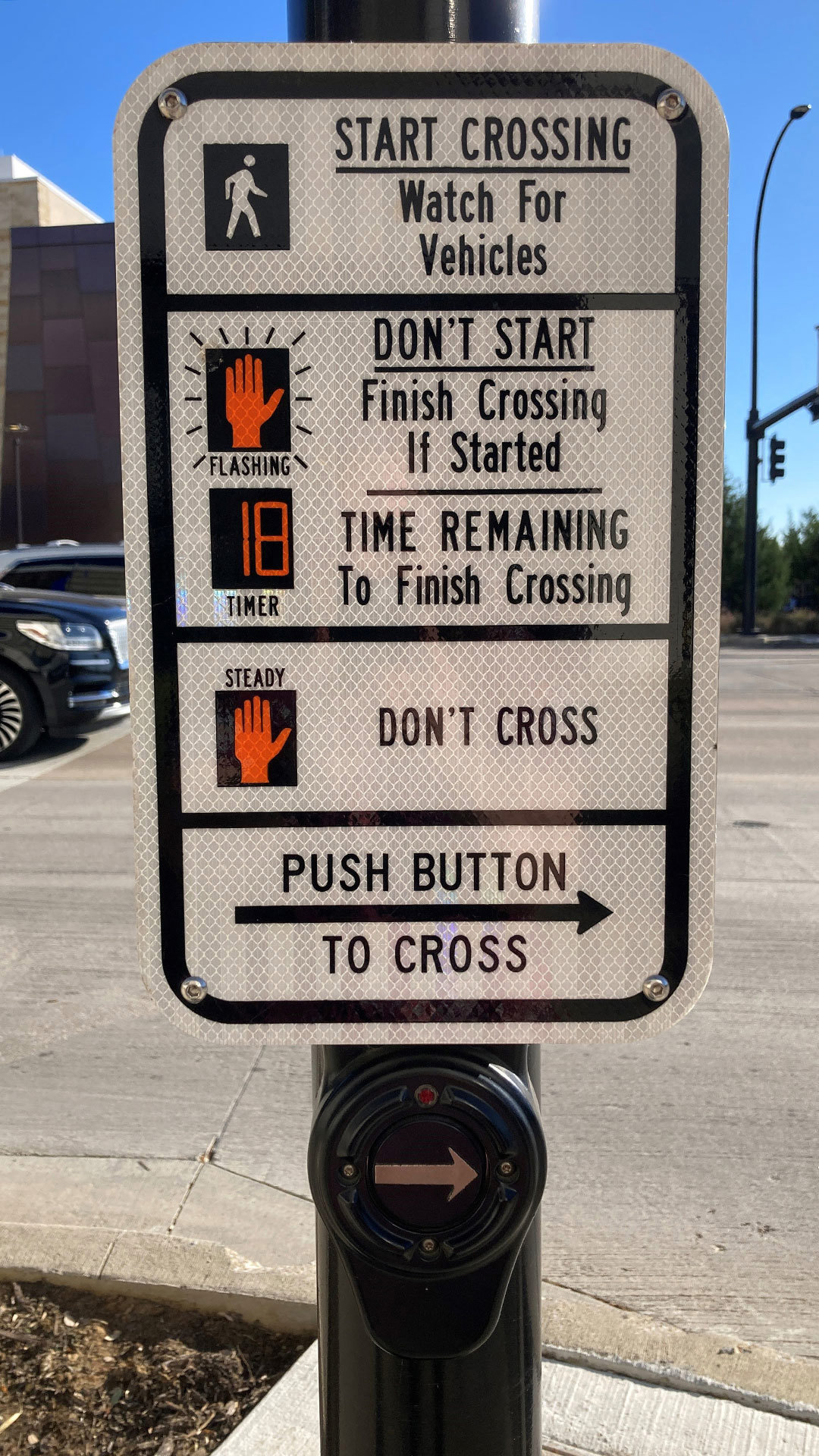
Accessible Pedestrian Signals (APS)
Summary: APS is a type of pedestrian signal that communicates information about when to walk and not walk at pedestrian crossings through audible signals. They provide enhanced information to pedestrians who are blind or have low vision. Examples include stating the direction of the crosswalk and the street name. APSs also have street names in Braille or raised print installed in them.
Safety Benefits: APS have found to improve the crossing of intersections by blind people due to a more accurate judgement of the WALK interval, reduced pedestrian delay, and more crossings completed before the signal change.
Accessible Pedestrian Signals: Appendix C: Research on APS (apsguide.org)
Continental Crosswalk
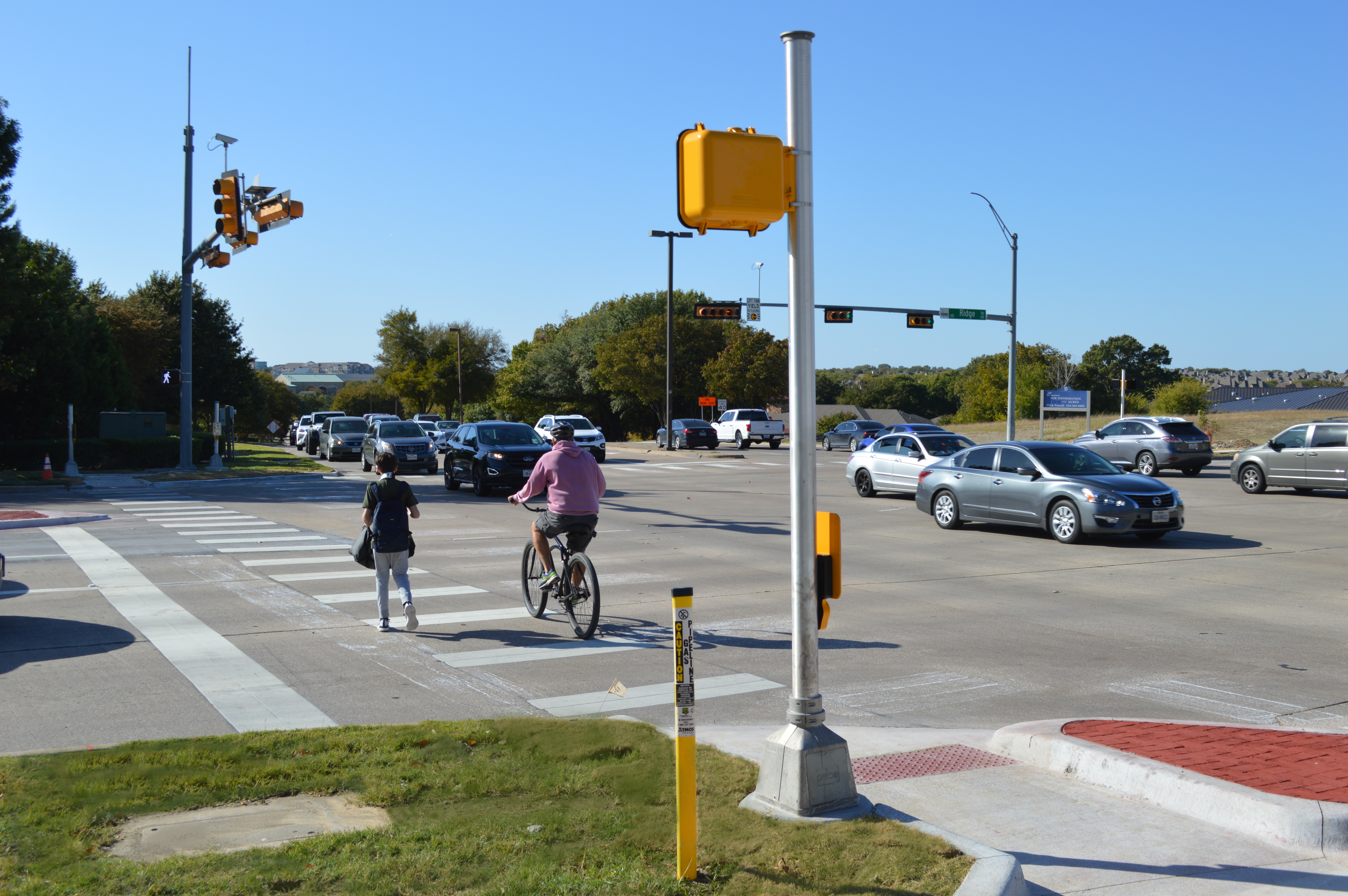
Summary: Continental Crosswalks are considered high visibility crosswalks. A standard crosswalk consists of two parallel white lines. The two white lines mark the crosswalk. Compared to a standard crosswalk, a continental crosswalk consists of multiple stripes, likened to piano keys, that are painted along the path of the crosswalk. This makes the crosswalk more visible compared to the standard parallel lines. This helps drivers see that people might be crossing along the path, and it gives pedestrians a clearer understanding of the path of the crosswalk. Continental crosswalks can be used at intersections with traffic lights, intersections without traffic lights, or at midblock locations.
Safety Benefits: The striping pattern of the continental crosswalk is more visible to drivers thus increasing drivers' awareness to people in the crosswalk. This increases safety for people in the crosswalk. When continental crosswalks are paired with other enhancements, crashes can be reduced by 23-48% (Examples of other enhancements include Rectangular Rapid Flashing Beacon (RRFB), refuge islands, in-street yield signs, and curb extensions.)
Coordinated Signal Timing
Summary: Coordinated signal timing synchronizes traffic movements and manages the progression of specific modes where uninterrupted flow is desired along a corridor. This countermeasure is typically applied on corridors with closely spaced intersections (1/4 mile or less), and where there is a desire for "platooning", which is the seamless flow of a given street user or set progression speed.
Safety Benefits: Improved signal timing coordination can improve safety by reducing the number of stops and abrupt braking along a corridor. This, in turn, reduces the potential for rear-end crashes between and leading up to signalized intersections
Corridor Access Management
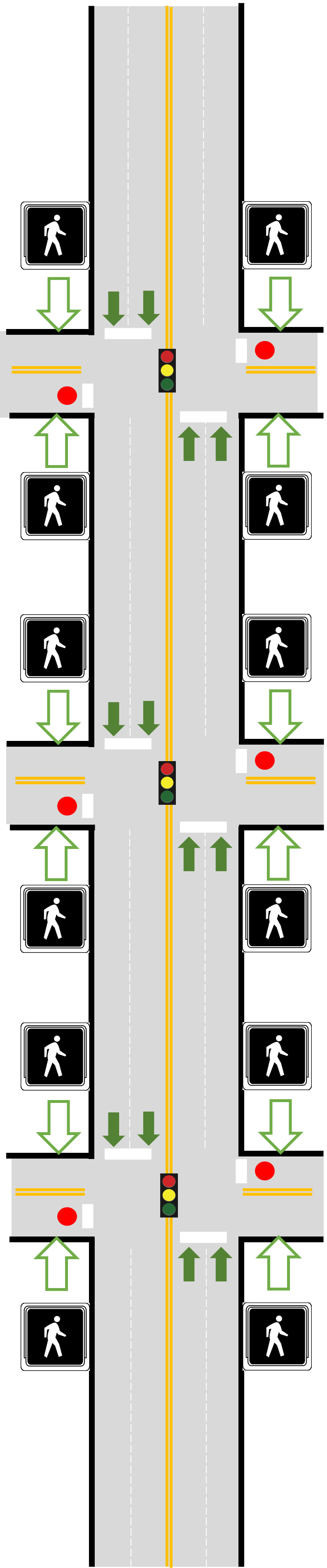
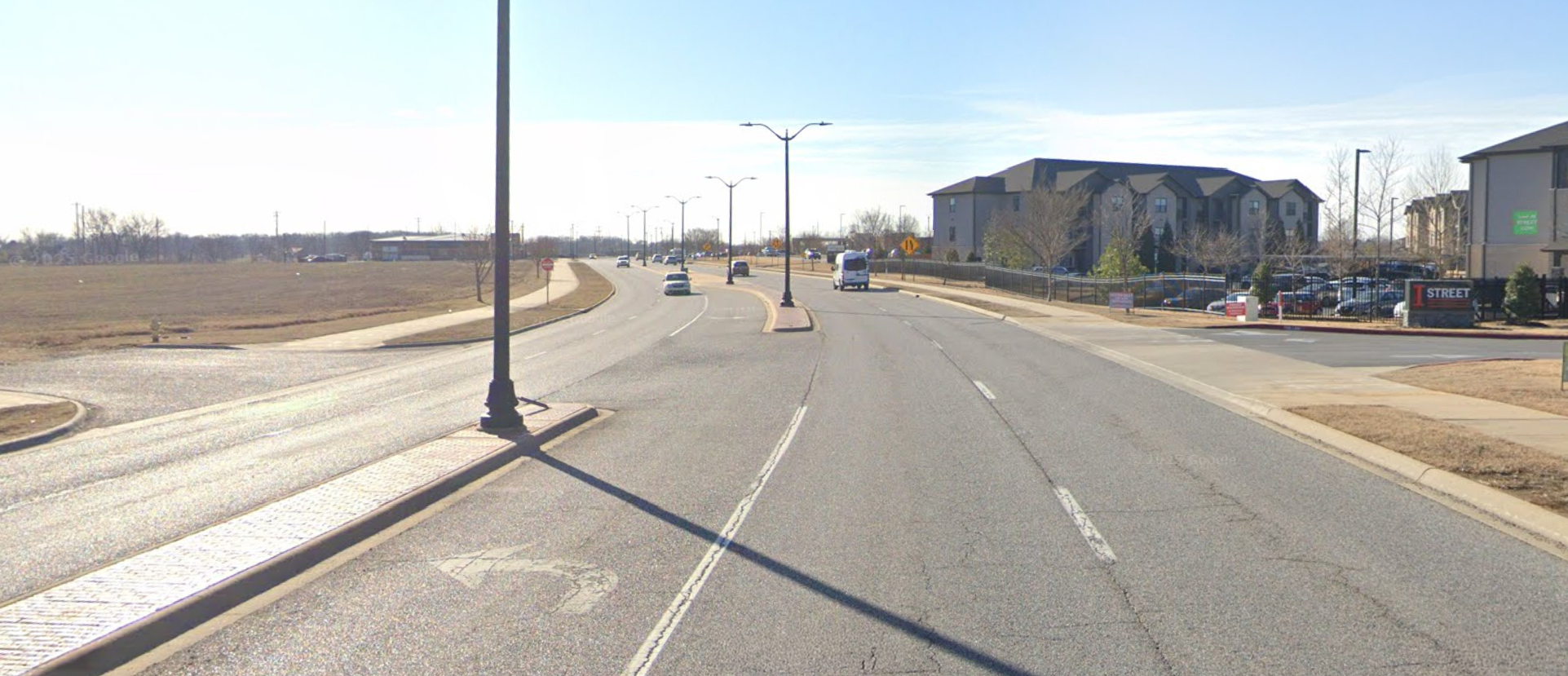
Summary: Corridor access management balances safe, efficient traffic flow with necessary access to adjacent land uses by managing the location, spacing, and design of driveways and intersections.
Safety Benefits: Access management can improve safety by reducing the number of conflict points for all roadway users. Examples of this are limiting allowable movements at driveways, providing turn lanes, and utilizing designs such as roundabouts or reduced left-turn conflicts (such as restricted crossing U-Turns and median U-Turns).
https://highways.dot.gov/safety/proven-safety-countermeasures/corridor-access-management
Continuous Sidewalk and Multi-Use Path
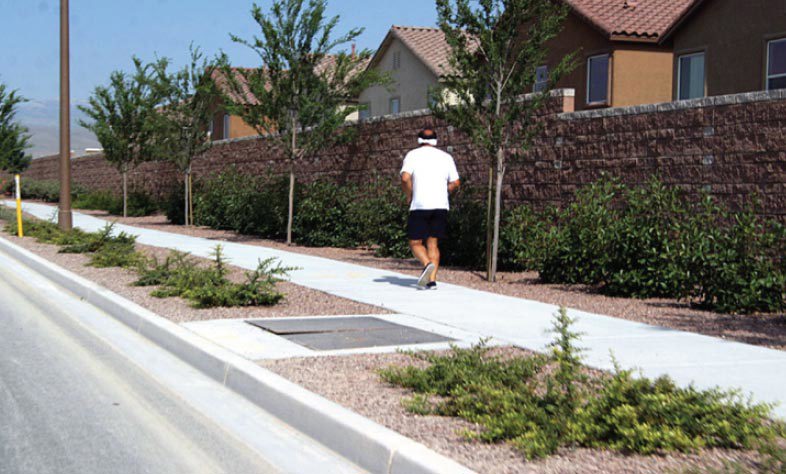
Summary: Implementing continuous sidewalks and multi-use paths can remove vulnerable road users from the roadway and can increase the transportation options for individuals who may not be able to drive a car. Additionally, by removing pedestrians from the roadway, motorist operations are improved and capacity increased.
Safety Benefits: Providing continuous sidewalk multi-use paths reduces the probability of pedestrian-vehicle crashes and rear-end crashes caused by motorists slowing down for pedestrians either in or very close to the roadway.
https://highways.dot.gov/sites/fhwa.dot.gov/files/2022-06/walkways_trifold.pdf
Flashing Yellow Arrow
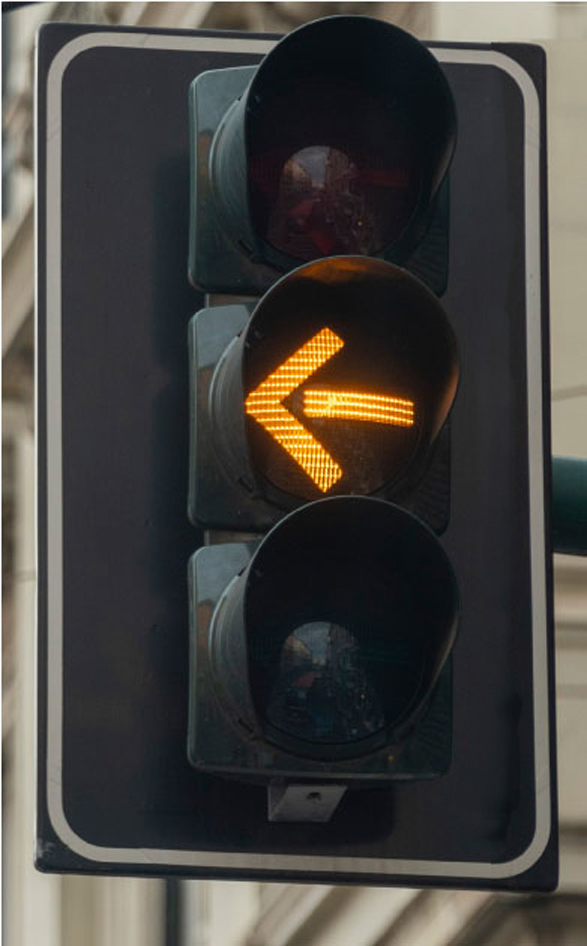
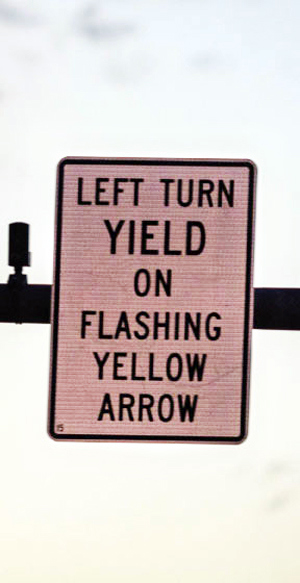
Summary: A Flashing Yellow Arrow (FYA) signal indicates a permissive signal phase where left turners may make their left turn if there are no opposing vehicles. FYAs improve intersection safety by providing clearer instructions to left-hand turning drivers. When drivers see flashing traffic signal lights, they intuitively know to take extra precautions.
Safety Benefits: Flashing yellow arrows remind left turning traffic that they must yield to through traffic, and only turn when it is safe to do so. Flashing Yellow Arrows have been shown to decrease left turn crashes by 20%.
https://www.dot.state.mn.us/trafficeng/signals/
flashingyellowarrow.html
Leading Pedestrian Interval
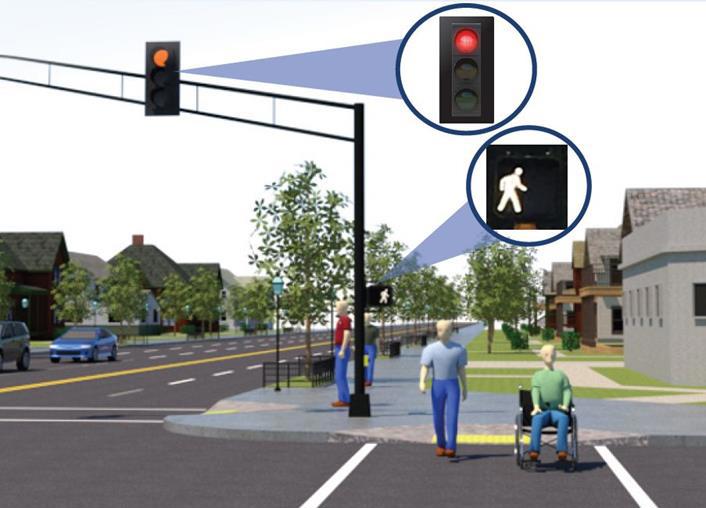
Summary: A leading pedestrian interval (LPI) gives pedestrians the opportunity to enter the crosswalk at an intersection 3-7 seconds before vehicles are given a green indication. Pedestrians can better establish their presence in the crosswalk before vehicles have priority to turn right or left.
Safety Benefits: LPIs have been shown to increase the visibility of crossing pedestrians, reduce conflicts between pedestrians and vehicles, increase the likelihood of motorists yielding to pedestrians, and enhance safety for pedestrians who may be slower to start into the intersection.
https://highways.dot.gov/safety/proven-safety-countermeasures/leading-pedestrian-interval
.png)
Pedestrian Protection
Summary: Pedestrian Protection can be combined with flashing yellow arrow (FYA) or permissive-only signals to reduce or omit the permissive FYA overlap while the conflicting pedestrian phase is active.
Safety Benefits: This countermeasure can improve safety by reducing conflicts between motorists turning left and pedestrians.
Protected Left-Turn Movement
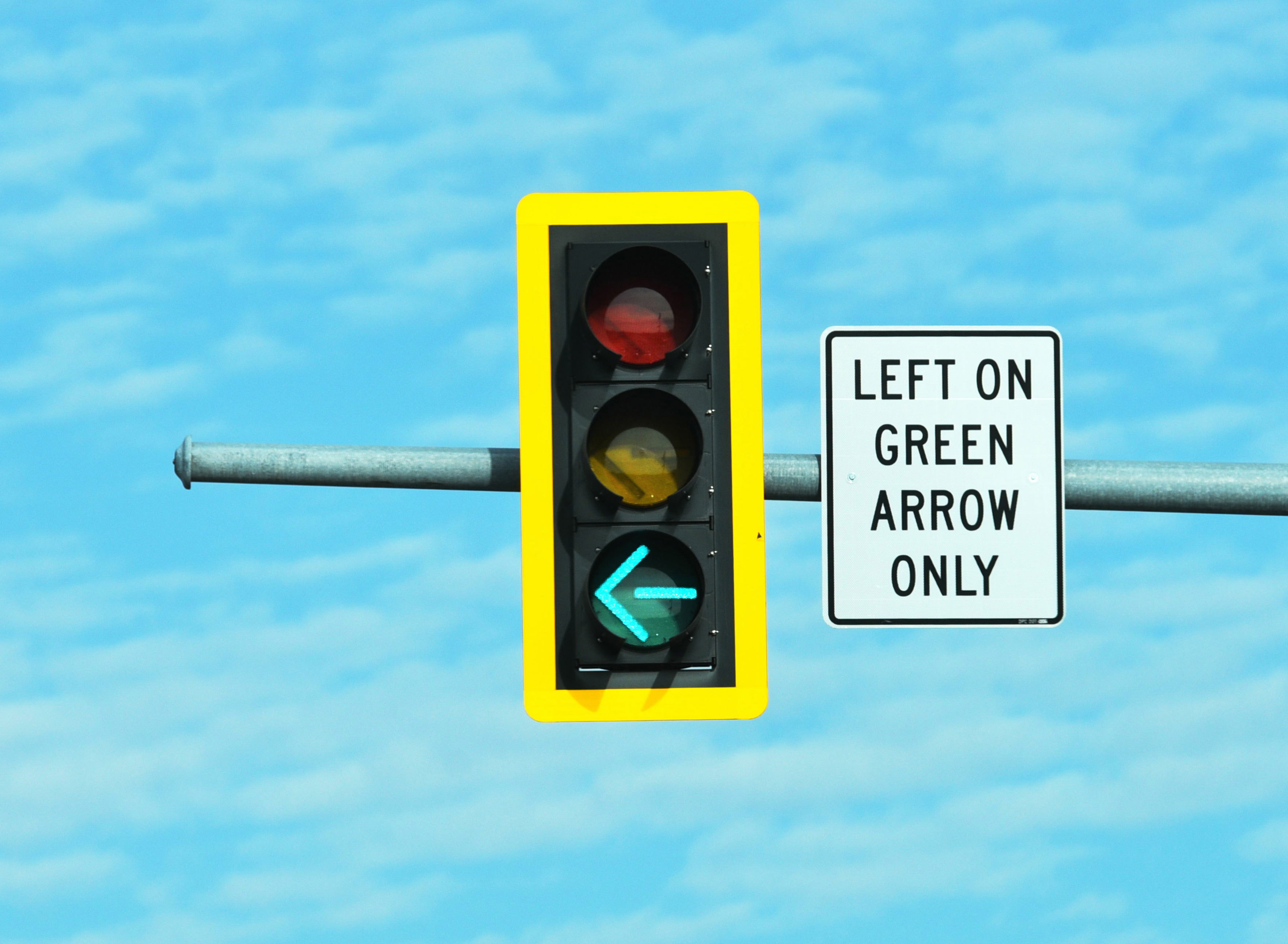
Summary: Protected Left-Turn Movement is when a green arrow for left-turning vehicles allows drivers to complete the turn without conflicting with oncoming traffic or pedestrians. During this phase, oncoming traffic is stopped with a red light.
Safety Benefits: Studies reveal that protected-only left-turn signals (a solid green left arrow) reduces injury crashes and fatalities when compared to a protected/permitted left-turn signal. The green arrow alerts the left-turning traffic that is safe to turn, and oncoming traffic is stopped.

Striping
Summary: Pavement markings on the roadway communicate to roadway users the intended travel path. Different striping patterns and colors give drivers clues as to the direction of traffic (i.e. arrows), and allowable movements such as passing.
Safety Benefits: Striping guides vehicles and pedestrians in appropriate use of roadway. Ensuring that striping is visible, especially at night or in wet weather, can reduce collisions.
The Benefits of Pavement Markings - Safety | Federal Highway Administration (dot.gov)
Traffic Signal Backplates (Reflective Yellow)
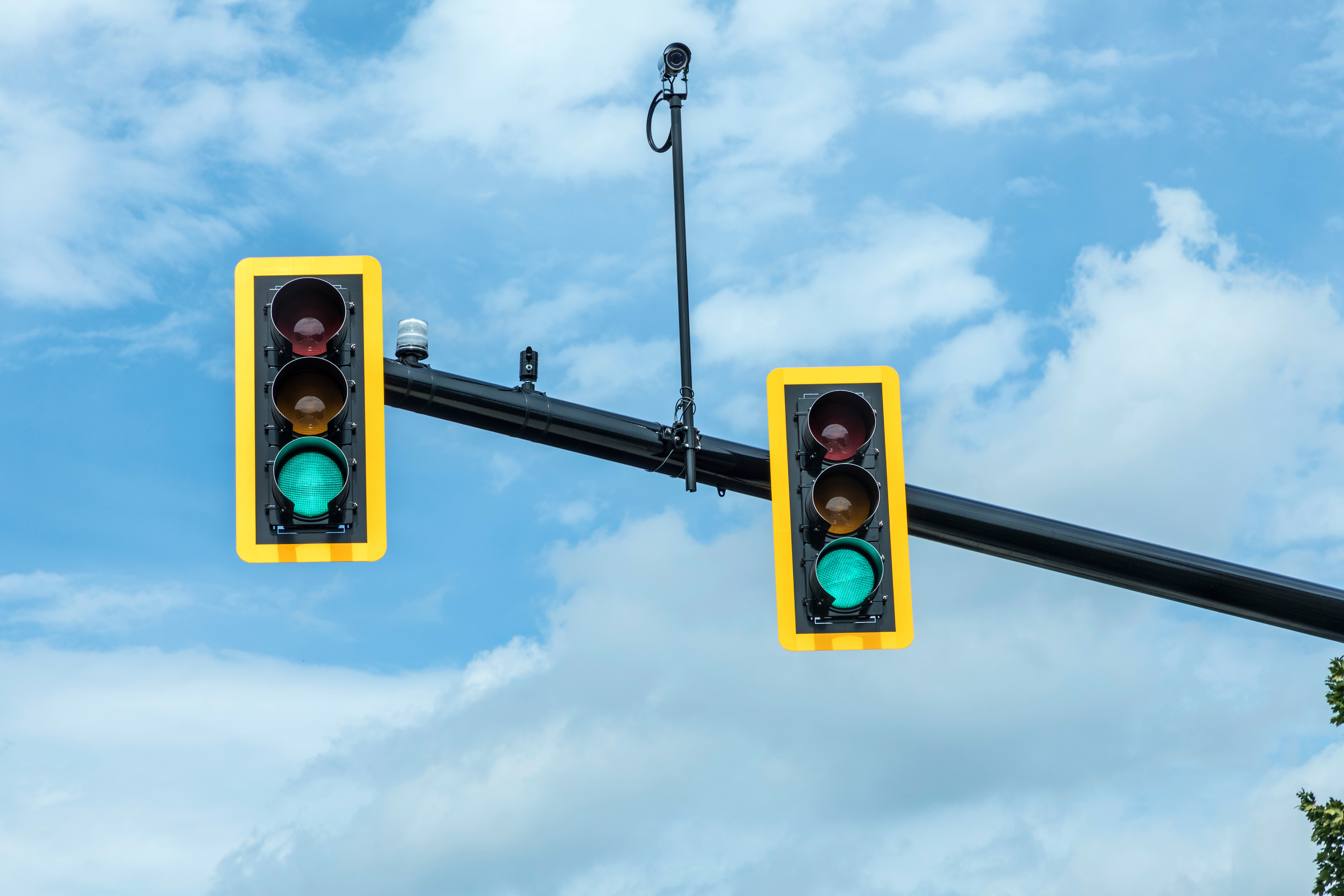
Summary: Reflective yellow backplates are added to the back of a traffic signal head. The yellow contrasts with the signal head, improving the overall visibility of the signal in both daytime and nighttime. In addition, when there are power outages, the retroreflective backplate is still visible, signaling to drivers they are coming upon an intersection and to stop.
Safety Benefits: Reflective yellow backplates provide additional visibility for traffic signals. When reflective backplates are put on the back of signal heads, there is a 15% reduction in total crashes